For most of my life I assumed everyone experienced the world as a crowded place.
My memories collide with observations. Fragments attach themselves to fragments. Flowers remind me of a conversation. A landscape carries traces of people from centuries—or five minutes - ago.
A recent ADHD diagnosis offered one possible explanation for this perpetual head traffic and mis-signalling. Discovering it in my seventh decade has been quite a trip.
The formal expression of this way of seeing began with places, people, architecture, rituals, landscapes and symbols, but gradually became less straightforward.
Images are now layered, combined and reassembled. Elements migrate from one frame to another. Things never physically together find themselves sharing the same visual space—and somehow belonging.
The world is complicated and the human mind is endlessly predictive. We construct meaning from incomplete information.
My photographs began to emerge from that accumulation of signals and are, therefore, not an attempt to record reality—and I wouldn't presume to try. Rather, they explore the distance between seeing and understanding.
What interests me now is not accuracy but resonance.
A place is never just a place, nor a thing merely a thing. Every image arrives carrying history, mythology, emotion, cultural memory, or, whatever personal associations each viewer brings. By the time experience reaches consciousness, it has already passed through layers of interpretation.
Many of these images therefore appear complicated, occasionally chaotic and, often, pareidolic. That’s my mind trying to assemble the fragments, and, when it succeeds, it produces something quite different from what the camera saw.
Over time I have become less interested in documenting what is in front of me than exploring what happens after I look at it. The image becomes less a record of a place than an encounter between an external reality and my internal weather at that moment.
Perhaps that is why flowers, gods, markets, mountains, or, memories and half-forgotten stories, find themselves occupying the same frame. They already occupy that space in my mind.
These images are an invitation to linger with me, so, resist the urge to understand them immediately. Stay a little longer and see what emerges once certainty becomes less important.
malcolm.mclauchlan@gmail.com
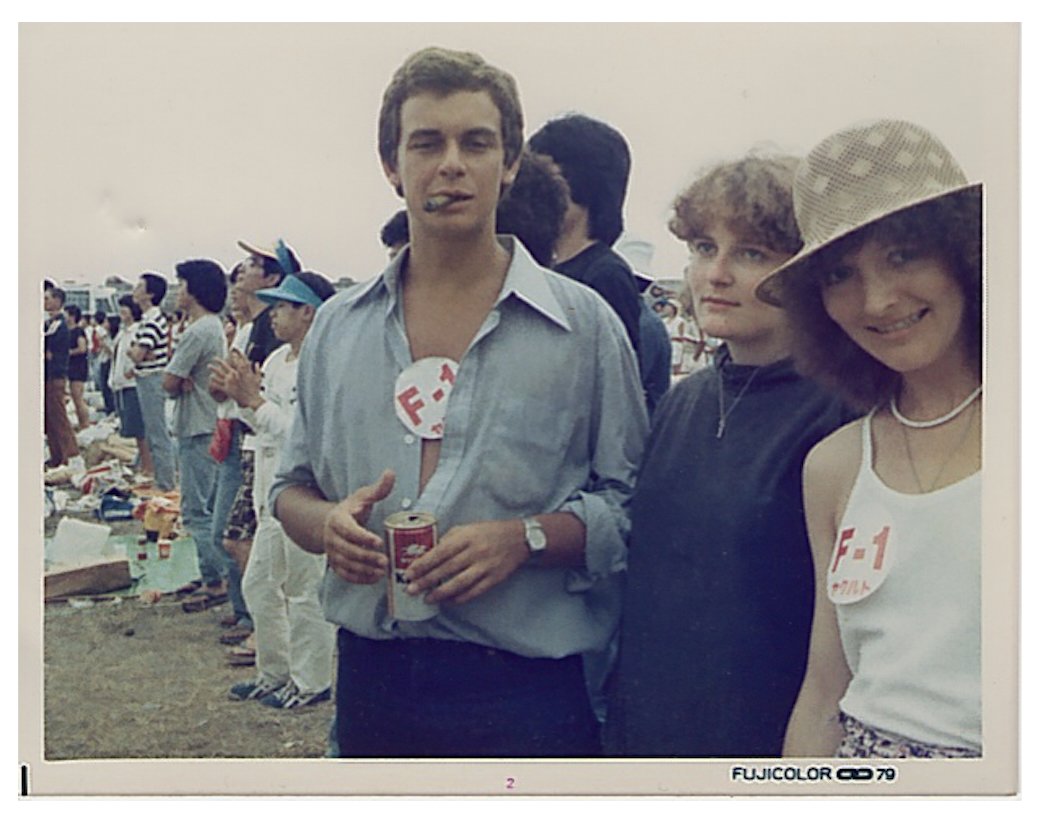
Younger days, in full flight in a crowded place